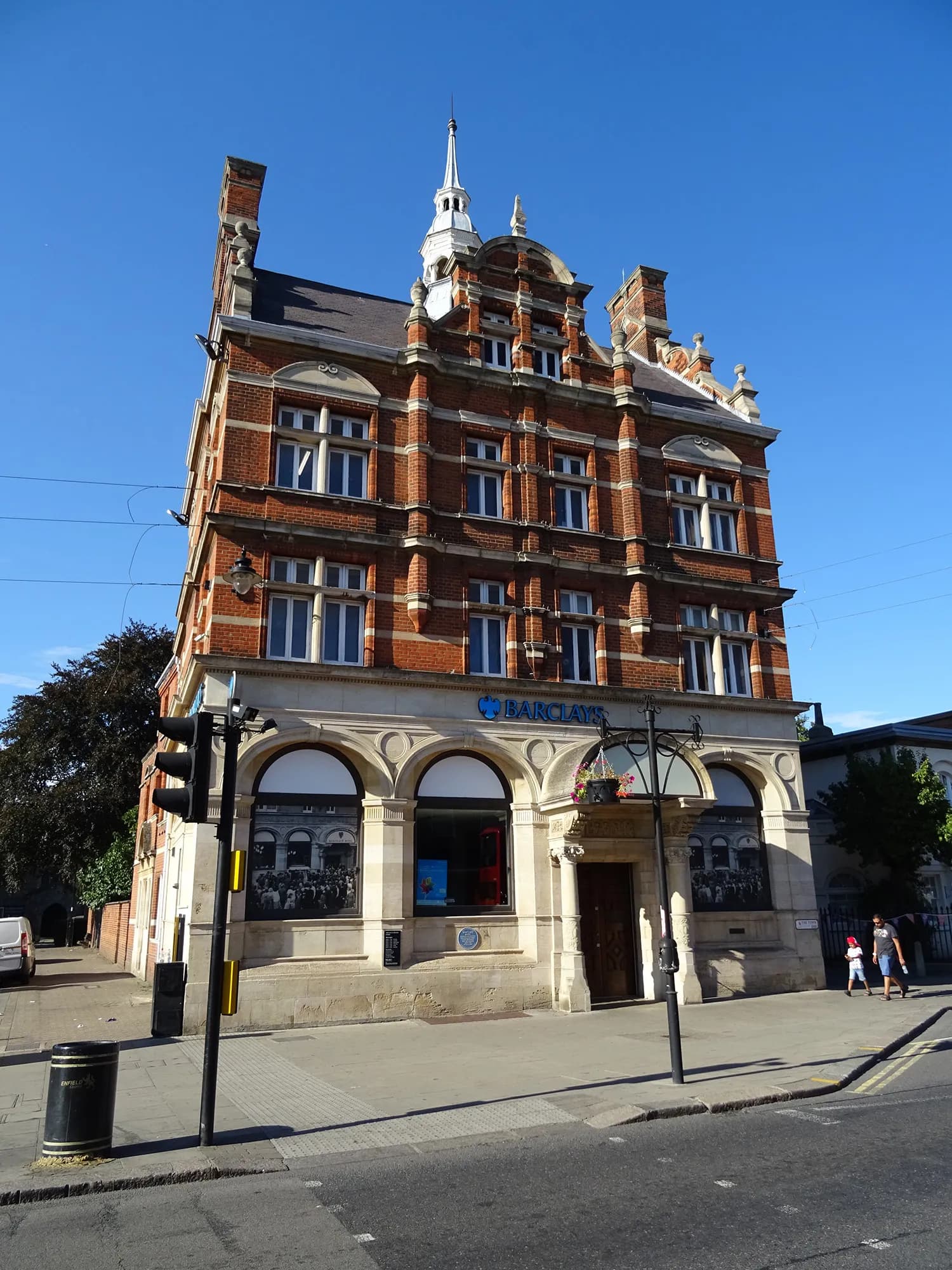
On 27 June 1967, a quiet corner of Enfield Town became the birthplace of a banking revolution. The world's first automated teller machine, or ATM, was unveiled at Barclays Bank on The Town, allowing customers to withdraw cash outside traditional banking hours for the first time in history.
The Machine That Changed Everything
The installation at 20 The Town, Enfield, marked a turning point in how people accessed their money. Prior to this innovation, banks operated strictly from 9:00am to 3:30pm on weekdays. Anyone needing cash outside these hours faced a frustrating wait until the next working day.
The machine was developed by De La Rue, the printing firm, under the leadership of John Shepherd-Barron, managing director of De La Rue Instruments. The system, known as the De La Rue Automatic Cash System (DACS) or "Barclaycash", operated using paper cheques impregnated with carbon-14, a mildly radioactive substance. Customers inserted these cheques into a drawer and entered a four-digit personal identification number, or PIN, on a keypad to receive their money.
The modest maximum withdrawal was £10, a sum Shepherd-Barron described as "quite enough for a wild weekend". The machine dispensed £1 notes. Concerns about the radioactive cheques were dismissed by Shepherd-Barron, who calculated that a person would need to eat 136,000 such cheques for any measurable effect.
Why Enfield Was Chosen
Enfield was selected as the test site for several practical reasons. The location offered favourable planning permission prospects, possessed a good pavement facade and sufficiently high windows, and provided a representative cross-section of banking customers. The branch itself carried historical significance as the first London and Provincial Bank branch in Enfield, having opened in 1875. The striking Flemish Renaissance-style building, designed by William Gillbee Scott and completed in December 1897, offered an impressive setting for such a momentous launch.
The machine was installed on the west side of the building, facing the market square.
A Star-Studded Launch
The inauguration ceremony drew notable figures. Actor Reg Varney, a resident of Enfield best known for his role in the television series On the Buses, performed the first withdrawal. Barclays deputy chairman Sir Thomas Bland drew back a velvet curtain to reveal the machine to the assembled crowd.
Carol Greygoose, a teller at the branch in 1967 aged just 18, later recalled the significance of the installation: "The bank was only open until 3:30pm at that time, so when the ATM was introduced, customers could get cash outside of banking hours, which must have made a huge difference to people's lives."
The Inspiration Behind the Invention
Shepherd-Barron conceived the idea for the cash machine while lying in the bath, frustrated at being unable to withdraw money when his bank was closed. He found inspiration in an unlikely source: chocolate vending machines. The four-digit PIN standard, which became the world standard, was born from domestic necessity; Shepherd-Barron's wife Caroline could only remember four figures comfortably.
James Goodfellow, a Scottish engineer, independently patented the PIN system in May 1966 and is credited with developing the modern ATM using encrypted cards and PINs. Both men were later honoured with OBEs for their contributions: Shepherd-Barron in the 2005 New Year Honours, and Goodfellow in the 2006 Queen's Birthday Honours.
From Enfield to the World
The impact of that Enfield installation cannot be overstated. By 2015, approximately 3.5 million ATMs operated worldwide. The United Kingdom alone hosts around 70,000 machines. Shepherd-Barron later reflected on seeing a farmer in Thailand using an ATM: "It was the first evidence to me that we'd changed the world."
Enfield's Banking Heritage Today
The Barclays branch at 20 The Town remains a site of pilgrimage for those interested in financial history. A blue plaque commemorating the world's first cash machine is fixed to the building's exterior. In 2017, Barclays installed a gold-coloured ATM and an additional commemorative plaque at the site to mark the 50th anniversary of the original installation.
The building's significance was formally recognised in March 2023 when it was granted Grade II listed status on the National Heritage List for England. The listing citation cites the building's group value with the adjacent Old Vestry Office and its importance as the site of the ATM installation.
A Lasting Legacy
The machine installed in Enfield on that June day in 1967 fundamentally altered the relationship between banks and their customers. For the first time, ordinary people could access their own money on their own terms, free from the constraints of banking hours. What began as an experiment on the west side of a Victorian bank building in a London suburb has grown into an essential component of modern life, used billions of times annually across every continent.
Enfield can rightly claim its place in history as the town where banking changed forever.